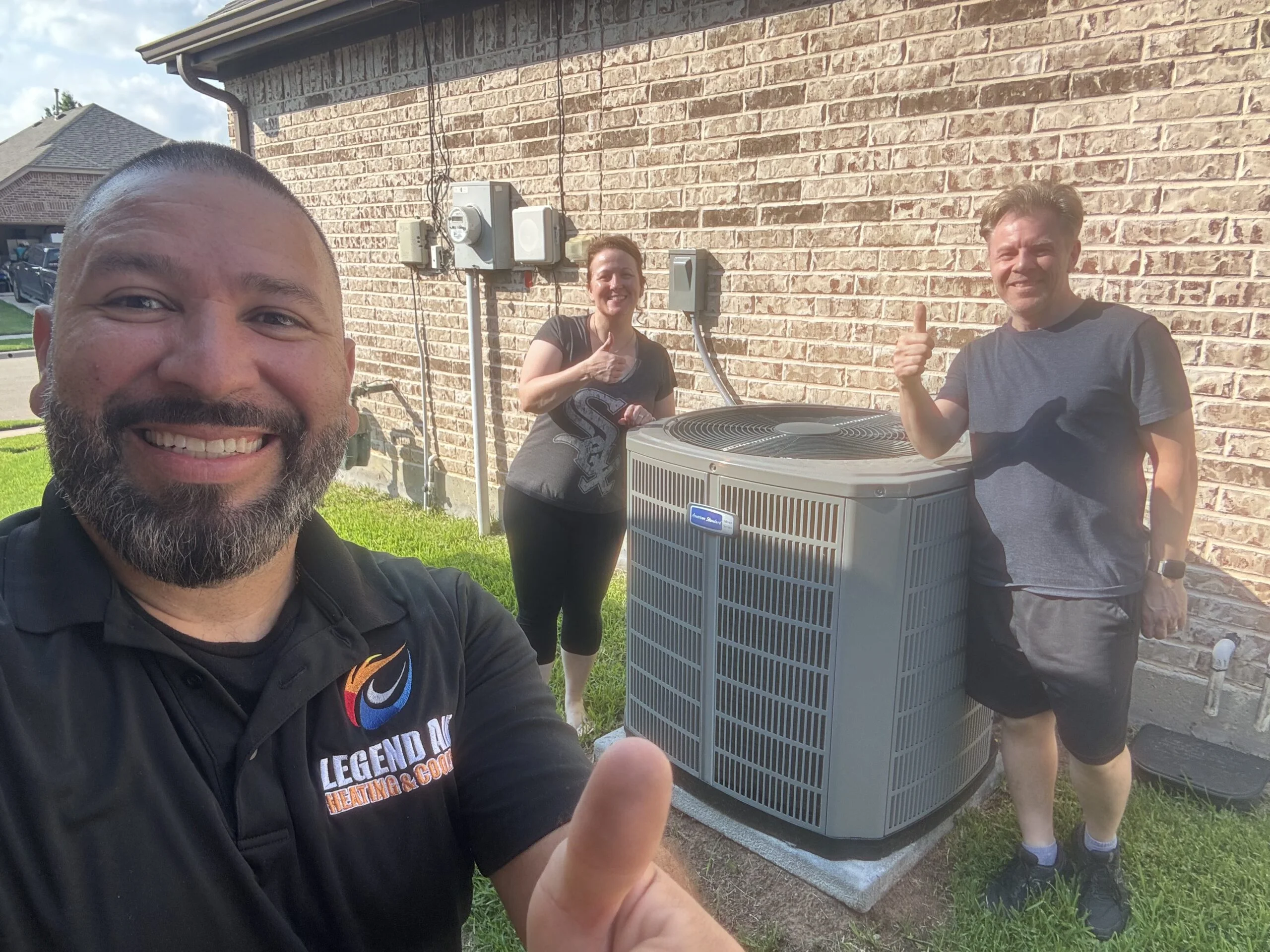
You just wrapped your last pool float and stored your patio furniture. Now you’re standing in your yard, staring at your outdoor air conditioner, wondering if it needs winter protection. That plastic cover at the hardware store seemed like a good idea, but the tag on it reads $50 and you’re not even sure if it’s necessary.
Here’s some info that might save you money and hassle: most HVAC professionals actually recommend leaving your outdoor unit completely uncovered all winter long. Yes, really.
At Legend Air Conditioning & Heating, we’ve helped many homeowners in Frisco and across the Dallas-Fort Worth area understand what their AC units actually need when temperatures drop. What we’ve learned might surprise you.
Why AC Covers Often Create More Problems Than They Solve
Modern outdoor AC units are built tough. They’re engineered to handle everything Texas weather can throw at them, including rain, ice, and those occasional hard freezes we get here in DFW.
When you seal up your unit with a cover, three serious problems can develop:
Trapped Moisture Leads to Rust and Corrosion
Think about what happens when you leave a wet towel in a plastic bag. It doesn’t dry out, it just gets mildewy. The same thing happens inside a covered AC unit.
Condensation forms inside the unit naturally. Without proper airflow, that moisture can’t evaporate. The result? Accelerated rust on coils, fins, and electrical components. This is the exact opposite of protection.
DR Richardson, Co-Founder and CEO of Elephant Energy, warns that covering restricts airflow and traps humidity inside, putting AC units at risk of rust and erosion.
Rodents Love Covered AC Units
A covered air conditioner looks like a luxury hotel to mice, squirrels, and other small animals. It’s warm, dry, and protected from wind. Perfect for winter nesting.
These unwanted guests chew through wiring, build nests that block drainage, and leave droppings that corrode components. By spring, you might be facing hundreds in AC repair bills in Flower Mound, TX because of guests you unknowingly invited in.
Legend Air Conditioning & Heating techs have opened countless units in March to find elaborate rodent condos complete with chewed wires and stuffed drain lines.
Your Warranty Might Be Voiding Itself
Most air conditioner manufacturers don’t recommend covering outdoor units. Some explicitly state that damage caused by improper covering will void the warranty.
Most air conditioning manufacturers don’t recommend covering outdoor units, and if you have a heat pump, covering can pose a fire hazard since heat pumps operate year-round.
What HVAC Experts Are Saying in 2025
The evidence against covering AC units keeps getting stronger. Recent research shows units left uncovered actually last longer.
A study by the American Society of Heating, Refrigerating and Air-Conditioning Engineers (ASHRAE) shows that units left uncovered during winter last about 15% longer and encounter fewer system failures than covered ones.
That’s not a small difference. We’re talking about potentially years of additional lifespan just by leaving your unit alone.
But What About Dallas-Fort Worth Weather?
This is where location really matters. If you lived in Minnesota or upstate New York, the conversation might be different. But here in the DFW area? Our winters are relatively mild.
Here’s what typical DFW winters look like:
- Average January lows around 37°F
- Occasional hard freezes that last a day or two
- Rare snow or ice events
- Mostly sunny, dry winter days
Your outdoor unit was designed and tested for climates far harsher than what we experience. Those coils can handle our occasional ice storm without breaking a sweat.
We’ve worked on many uncovered units across Frisco, Plano, Allen, and McKinney. The ones that stay uncovered year-round? They consistently perform better than covered ones.
What You Should Do Instead of Covering
Skip the cover and focus on maintenance that actually protects your investment. These simple steps work better than any tarp or plastic shield.
Clear Debris Regularly
Leaves, twigs, seeds, and dirt can pile up around and inside your unit during fall. This buildup blocks airflow and traps moisture against metal components.
Take 15 minutes each month to:
- Remove leaves and debris from the top and around the base
- Check for any branches or sticks that have fallen on the unit
- Trim back plants or shrubs to maintain 2-3 feet of clearance on all sides
- Look for any signs of pest activity
Keep Your Unit Elevated
Your AC should sit on a concrete or composite pad that elevates it at least 2-6 inches above ground level. This prevents standing water from pooling around the base and reduces mud splash that can clog fins.
If your unit sits directly on the ground or in a low spot where water collects, it’s worth having a professional install a proper pad. At Legend Air Conditioning & Heating, Our AC maintenance contractor can evaluate your unit’s placement during a routine maintenance visit.
Schedule Fall Maintenance Before Winter
This is the single most important step. A professional tune-up in October or November prepares your system for months of dormancy.
During a fall maintenance visit, our technicians:
- Clean the condenser coils thoroughly
- Inspect electrical connections for corrosion
- Check for rodent entry points and seal them
- Clear drain lines and pans
- Test the unit’s overall condition
- Look for any developing issues that could worsen over winter
If you’re looking for reliable ac installation in Frisco or maintenance, having a professional relationship with your HVAC company means someone who knows your system is just a phone call away.
Handle Snow and Ice Properly
When we do get snow or ice, a gentle approach works best. Brush off light accumulation with a soft broom. Don’t chip or scrape at ice buildup, as you could damage fins or coils.
For heavy ice, let it melt naturally. Your unit can handle it.
The One Exception: Top-Only Protection
There’s one scenario where covering makes sense, but it’s not what you think.
If you live in an area with large trees directly overhead, falling branches or heavy icicles could dent the top of your unit. In this specific case, you can place a piece of plywood on top during severe weather.
Important guidelines if you use plywood:
- Only cover the top, never the sides
- Secure it so wind won’t blow it away
- Remove it immediately after the storm passes
- Never leave it on permanently
This protects against physical impact without creating the moisture and pest problems of full covers.
What About Heat Pumps?
If you have a heat pump instead of a traditional air conditioner, never cover it. Period.
Heat pumps run year-round, providing both heating in winter and cooling in summer. Covering a heat pump can impede proper airflow, potentially causing overheating and posing a fire safety risk.
Not sure if you have a heat pump or a traditional AC? Look for your thermostat settings. If you can heat with it, it’s a heat pump. You can also check with your HVAC company, and we at Legend Air Conditioning & Heating are always happy to identify your system type during a service visit.
The Hidden Cost of Covering
Beyond rust and rodents, there’s another problem people don’t think about: the new refrigerant regulations.
Starting in 2025, the EPA has phased out R-410A refrigerant in new systems, transitioning to lower global warming potential alternatives. This means older systems using R-410A will become more expensive to repair as the refrigerant becomes scarcer.
Here’s how this connects to winter protection:
Moisture damage from improper covering accelerates coil corrosion. Corroded coils leak refrigerant. Refrigerant leaks on older R-410A systems will cost more to fix and might push you toward early replacement.
Proper winter care (leaving your unit uncovered and maintaining it professionally) extends your system’s lifespan and delays that expensive replacement decision.
Common Questions We Hear at Legend Air Conditioning & Heating
“Won’t snow damage my AC?”
Modern units handle snow just fine. The components are sealed against moisture, and light snow typically melts without issue. Heavy wet snow is rare in DFW, but even when it happens, your uncovered unit will fare better than a covered one trapping moisture.
“My neighbor covers theirs. Are they wrong?”
Not necessarily wrong, just possibly misinformed. Many homeowners cover AC units because it seems intuitive or because they’ve always done it that way. But the evidence and expert consensus lean heavily toward uncovered units lasting longer and having fewer problems.
“What if I already bought a cover?”
You can return it or save it for something else. If you feel strongly about using it, choose a breathable mesh-style cover and only use it during fall to block leaves. Remove it completely by December and don’t put it back on.
“Can I just cover it during really bad storms?”
Even temporary covering should be minimal. If a severe ice storm hits, you can place plywood on top only. But full covering, even temporarily, still traps moisture and should be avoided.
Ready for Winter? Here’s Your Quick Checklist
Before the first freeze hits Dallas-Fort Worth, run through this simple checklist:
☐ Clear all debris from around and on top of the unit
☐ Trim vegetation to maintain 2-3 feet clearance
☐ Check that the unit sits elevated on a proper pad
☐ Schedule your fall maintenance appointment
☐ Inspect for any obvious damage or rust spots
☐ Remove any covers or tarps you might have put on
That’s it. No covers needed. No complicated winterization procedures. Just basic maintenance and letting your unit do what it was designed to do.
Protect Your Investment the Right Way
Your outdoor AC unit represents a significant investment in your home’s comfort. Protecting it properly means understanding what actually helps versus what just feels helpful.
The best protection isn’t a cover or tarp. It’s regular professional maintenance, keeping the area clear, and trusting the engineering that went into making these units weather-resistant.
At Legend Air Conditioning & Heating, we’ve built our reputation on honest advice and quality service across the entire Dallas-Fort Worth area. When we tell you to skip the cover, it’s because we’ve seen the results firsthand. Uncovered, well-maintained units consistently outlast and outperform covered ones.
Get Your System Ready for Winter and Beyond
Winter preparation is just one piece of year-round HVAC care. Whether you need a fall tune-up, have questions about your specific system, or want to schedule maintenance before the cold weather arrives, we’re here to help.
With over 700 five-star reviews from homeowners across Frisco and the surrounding area, Legend Air Conditioning & Heating has become the trusted name for HVAC service in DFW. Our family-owned business puts your comfort first, and we back up our work with a 10-year warranty option.
Ready to protect your AC the right way? Call Legend Air Conditioning & Heating at the number on our website or schedule your fall maintenance visit online. We offer 24/7 emergency service, free service calls with membership, and financing options to fit your budget.
Because when it comes to your home comfort, the service really is legendAIRy.
Frequently Asked Questions
Should I cover my AC unit in winter if I live in Frisco, Texas?
Generally no. DFW winters are mild enough that covering creates more problems than it solves. Trapped moisture and pest infestations are bigger threats than our occasional cold snaps. Focus on clearing debris and scheduling professional maintenance instead.
What happens if I accidentally run my AC with a cover on?
Running your system with a cover can cause severe damage. The condenser can’t reject heat from the refrigerant properly, leading to overheating, potential refrigerant leaks, or complete system failure. Some units have pressure safety devices, but not all models include this protection.
Are breathable AC covers safe to use?
Breathable covers are safer than plastic tarps, but most experts still recommend leaving units completely uncovered. If you use a breathable cover, only apply it during fall for heavy leaf drop, then remove it completely for winter. Never use covers that restrict airflow or trap moisture.
How often should I check my uncovered AC unit during winter?
Check your unit monthly during winter. Clear any accumulated debris, brush off light snow if needed, and look for signs of pest activity or damage. This takes about 10-15 minutes and helps catch small issues before they become expensive problems.
Will leaving my AC uncovered void the warranty?
No. Leaving your unit uncovered is actually recommended by most manufacturers. Covering it improperly is what might void your warranty. Always check your specific manufacturer’s guidelines, but uncovered units are designed to withstand outdoor weather year-round.
What’s the best way to protect my AC from falling ice or branches?
If you have large trees overhead, you can temporarily place a piece of plywood on top of the unit during severe ice storms. Secure it against wind and remove it immediately after the weather passes. This protects against physical impact without the problems of full covers. For branches, keeping trees trimmed back 2-3 feet from the unit prevents most issues.
Do I need different winter protection for a heat pump versus an AC?
Heat pumps should never be covered because they operate year-round for both heating and cooling. Traditional AC units that only cool are also best left uncovered, but the risk of accidental damage is higher with heat pumps since they might run during winter. If you’re unsure which system you have, contact an HVAC professional for identification.
What should I do if I find rodents in my uncovered AC unit?
Contact a professional HVAC technician immediately. Rodents can cause significant wiring and component damage. A tech can safely remove the nest, repair any damage, identify and seal entry points, and check for other issues. Don’t attempt to remove nests yourself, as you could damage sensitive components or encounter aggressive animals.