If you’ve been shopping for a new HVAC system, you’ve probably run into both Rheem and Trane. And at some point, you’ve likely thought: Why is one so much more expensive than the other if they’re the same size?
That’s the question most homeowners in Frisco and across DFW can’t seem to get a clear answer to. So let’s break it down honestly, without the sales pitch. This guide covers what actually separates these two brands, what Texas law says about warranties when you sell your home, and what really determines whether your system performs the way it should.
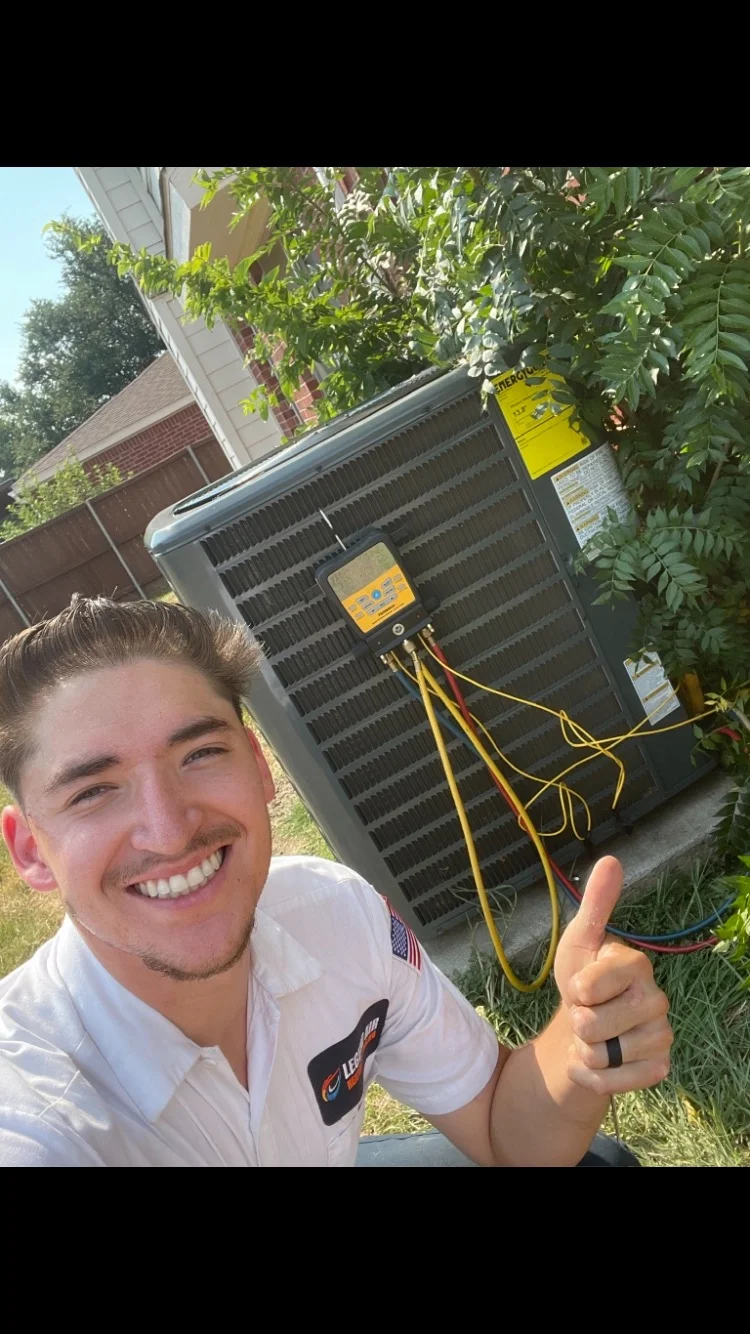
If you’re still figuring out what size or type of system your home needs, speaking with a qualified ac installation company in Frisco before you buy anything is the smartest first move.
Why the Rheem vs. Trane Debate Matters More Than You Think
Most brand comparisons online stop at “Trane is premium, Rheem is budget.” That’s oversimplified. Both brands are solid. Both have strong dealer networks across Texas. And both are now required to meet updated 2026 federal efficiency and refrigerant standards.
What actually matters is understanding where the differences show up, and whether those differences are worth money to you specifically.
How Each Brand Tiers Its Products (And Why Same-Size Units Cost Different Amounts)
Here’s something that confuses a lot of homeowners: two units with the same BTU rating can have wildly different price tags. That’s not a scam. It comes down to how each brand builds out its product line.
Rheem’s 2026 Line
Rheem’s current lineup, including the Endeavor® series and related 2026 models, breaks down roughly like this:
- Entry/mid tier (roughly 14 to 17 SEER2): Single-stage or basic two-stage compressors. These handle the Texas heat well and give you solid baseline efficiency.
- Premium tier (up to 20 SEER2 for AC, with a new 17 SEER2 heat pump launched April 2026): Variable or advanced two-stage compressors, EcoNet smart controls, and better dehumidification. A 20 SEER2 unit can be around 43% more efficient than a 14 SEER2 unit in some comparisons, which adds up over a 15-year lifespan in a Texas climate.
Rheem is consistently cited for easier serviceability and lower long-term repair costs, largely because of simpler designs and broad parts compatibility.
Trane’s 2026 Line
Trane’s lineup follows a similar tiered structure:
- Entry tier (e.g., XR16-style, around 17 SEER2): Single-stage, reliable, straightforward performance.
- Mid and premium tiers (up to 24 SEER2): Variable-speed compressors with precise temperature control, smart home integration, and what Trane positions as superior durability engineering.
Trane is consistently ranked as a premium brand in 2025 to 2026 industry comparisons, with strong marks for longevity and warranty support.
What’s Actually Driving the Price Gap?
Whether you’re looking at Rheem or Trane, the price difference between units at the same tonnage comes down to these factors:
- Compressor staging (single-stage vs. two-stage vs. variable-speed)
- SEER2 efficiency rating (higher efficiency = lower monthly bills over time)
- Build quality and sound ratings (how quiet the unit runs)
- Smart features and controls
- Warranty enhancements (some Rheem models include unit-replacement clauses)
Bottom line: You’re not paying more for a brand name. You’re paying for features, efficiency, and engineering. Whether those features make sense for your home is a different question.
What Texas Law Says About HVAC Warranties When You Sell Your Home
This one catches a lot of DFW homeowners off guard, especially when they’re preparing to list a home.
Texas HB 2110 (effective September 1, 2021, and still fully in force as of April 2026) requires that any manufacturer’s HVAC warranty automatically transfers to the new homeowner when a home is sold. The warranty transfers exactly as if the new buyer were the original purchaser. No transfer forms. No fees. No reduction in the remaining term.
This applies to both Rheem and Trane systems installed as fixtures in the home.
What About Trane’s National Transfer Policy?
Trane’s national policy (verified on their official site as of April 2026) states:
- The Registered Limited Warranty (typically 10-year parts, obtained by registering within 60 days of install) is transferable within 90 days of home sale for a $99 one-time fee.
- The Base Limited Warranty (typically 5 years) stays with the unit automatically.
However, in Texas, HB 2110 overrides the manufacturer’s transfer process and fees. You don’t pay Trane’s $99 fee in the DFW area. The warranty transfers with the home automatically.
What About Rheem?
Rheem follows standard national terms (typically 10-year parts with timely registration), but again, Texas law makes the transfer automatic with the home sale in Frisco and across DFW. No extra steps required by the manufacturer.
One important note: The law does not extend the original warranty. It simply transfers whatever coverage is remaining. Always confirm the exact remaining coverage with the installing contractor at the time of sale, since it ties back to the original install date and proper maintenance records.
For 2026 installs specifically: Georgia SB 112, effective January 1, 2026, also strengthens transferability in that state regardless of registration. State laws are moving in the direction of making warranty transfer simpler for homeowners.
Parts Availability and Service Speed in the DFW Area
One of the most practical questions to ask about any HVAC brand: If something breaks, how fast can a technician get the part?
For both Rheem and Trane, the answer in DFW is pretty straightforward.
Trane in DFW
Trane maintains an authorized Comfort Specialist™ dealer network. As of April 2026, Trane lists over 40 dealers servicing the Fort Worth area alone, with strong coverage throughout Dallas and the broader DFW metro. Parts are widely stocked at Texas supply houses, with same-day availability in most cases.
Rheem in DFW
Rheem uses a network of independent certified pros, searchable through Rheem’s “Find a Pro” tool. Multiple authorized Rheem/Ruud dealers actively serve the Dallas Metroplex and Frisco area. Rheem/Ruud parts are often described as “universal” and available same-day at every major HVAC supply house in Texas.
Both brands have solid coverage here. Rheem is frequently cited as having easier long-term serviceability and broader parts compatibility. Trane parts are equally available but sometimes noted as more proprietary in certain system configurations.
If you want a quick read on which brand your local technician is more experienced with, that’s worth asking directly. At Legend Air Conditioning & Heating, we work with both and can help you weigh that based on your specific situation.
What the Experts Say (Verified 2025 to 2026 Sources)
Two things keep coming up across 2025 to 2026 HVAC reviews and comparisons.
First, from HonestFix’s October 2025 comparison:
“Trane is known for durability and premium engineering, while Rheem offers better value, easier service, and lower long-term repair costs.” Source: HonestFix, October 2025
Second, and arguably more important, is a point echoed consistently across 2025 to 2026 expert reviews:
“The HVAC contractor you hire to install and maintain your heating and cooling system is MORE IMPORTANT than the brand.” Source: Multiple 2025 to 2026 HVAC industry reviews
That’s not just a throwaway line. HVAC systems that are improperly sized or installed underperform regardless of brand. A 24 SEER2 Trane unit installed incorrectly will cost you more than a well-installed 17 SEER2 Rheem unit in real-world performance.
2026 Regulations: What Changes Before You Buy
Whether you choose Rheem or Trane, there are federal and regional rules in effect right now that affect every new system installed in 2026.
Refrigerant Transition (EPA AIM Act)
New residential HVAC systems installed in 2026 must use low-GWP A2L refrigerants (such as R-32 or R-454B) instead of the older R-410A. Systems manufactured or imported after January 1, 2025, are already compliant.
What this means for you:
- A2L refrigerants are mildly flammable. Certified installers must have specific training.
- Retrofitting old systems to use new refrigerants is not permitted and voids warranties.
- Only licensed professionals can legally install A2L systems. This is not a DIY project.
Leak Repair Threshold (Effective January 1, 2026)
Systems containing 15 or more pounds of refrigerant now face expanded federal leak inspection, repair, and reporting requirements. This is a drop from the previous 50-pound threshold. Most residential systems fall under this rule.
SEER2 Regional Standards
The Southeast region, which includes much of Texas, requires a minimum 14.3 SEER2 for systems under 45,000 BTU. All 2026 equipment must meet this floor. Higher-efficiency tiers exceed it, which translates to monthly energy savings over time.
Proper Sizing Is Not Optional
Manual J load calculations are required for warranty validity and efficiency claims. A system that’s too large or too small for your home won’t perform as advertised, and in some cases, it will void the manufacturer’s warranty. Always confirm this step with whoever installs your system.
Rheem vs. Trane: A Quick Side-by-Side for DFW Homeowners
| Factor | Rheem | Trane |
| Brand positioning | Strong value, easier serviceability | Premium, durability-focused |
| Max efficiency (2026) | Up to 20 SEER2 (AC) | Up to 24 SEER2 |
| Parts availability in DFW | Same-day at major supply houses | Same-day at major supply houses |
| Dealer network in DFW | Strong independent network | 40+ authorized dealers in Fort Worth alone |
| Warranty transfer in Texas | Automatic (HB 2110) | Automatic (HB 2110, overrides $99 fee) |
| Long-term repair costs | Often cited as lower | Standard for premium tier |
| 2026 refrigerant compliance | Yes (new systems) | Yes (new systems) |
So Which Brand Is Actually Right for You?
Here’s an honest answer: it depends on what you’re optimizing for.
- If you want the highest efficiency ceiling and are planning to stay in your home long-term, Trane’s premium tiers are worth looking at seriously.
- If you want reliable performance, lower long-term service costs, and strong value for a hot Texas climate, Rheem is a legitimate choice that doesn’t require compromise.
- If you’re selling your home in the next few years, Texas HB 2110 means the warranty question resolves itself automatically, so that factor shouldn’t drive your decision either way.
What should drive your decision is the contractor installing the system. At Legend Air Conditioning & Heating, we’re a family-owned and operated company serving Frisco and the entire Dallas Fort Worth area. We carry over 700 five-star reviews and offer financing, 24/7 emergency hvac service, and a 10-year warranty option. We’ll help you choose the right system based on your home’s actual needs, not what’s easiest to sell you.
Ready to Stop Comparing and Start Cooling?
If you’re in Frisco or anywhere in DFW and you’re ready to talk through your options with a team that knows this climate, contact Legend Air Conditioning & Heating today. We’ll run the numbers, explain your options clearly, and give you a real quote based on your home, not a ballpark figure from the internet.
No pressure. Just honest answers from people who’ve been doing this in Texas for years.
Frequently Asked Questions
Is Rheem or Trane better for hot Texas summers? Both perform well in Texas heat. The key factor is SEER2 rating and proper sizing for your home’s square footage and insulation. A variable-speed unit from either brand will handle humidity better than a single-stage model. Your contractor should run a Manual J load calculation before recommending any system.
Does the HVAC warranty transfer if I sell my home in Frisco? Yes. Under Texas HB 2110, HVAC warranties automatically transfer to the new homeowner at the time of sale, with no fees and no reduction in the remaining term. This applies to both Rheem and Trane systems. Confirm the remaining coverage duration with the installing contractor at time of sale.
Why is Trane more expensive than Rheem for the same BTU? Price differences come from compressor type (single-stage vs. variable-speed), SEER2 efficiency rating, build quality, sound ratings, and smart features. It’s not just the brand name driving the cost.
Can I still get R-410A systems installed in 2026? New systems must use A2L refrigerants (like R-32 or R-454B) under the EPA AIM Act. Some legacy R-410A inventory had limited installability through early 2026, but for any new system being installed now, expect A2L compliance. Only certified technicians trained in A2L handling can legally install these systems.
What SEER2 rating should I look for in DFW? The regional minimum for Texas is 14.3 SEER2 for systems under 45,000 BTU. For DFW’s hot summers, many homeowners find that mid to high-efficiency options in the 17 to 20+ SEER2 range offer meaningful monthly savings over time. Ask Legend Air Conditioning & Heating to help you calculate the payback period for your home.
Does it matter which HVAC brand my contractor prefers? More than most people realize. A contractor who is deeply familiar with a brand’s installation specs and troubleshooting will generally get better results, even with the same equipment. Ask your contractor which brands they install most frequently and why.
Can Legend Air Conditioning & Heating install both Rheem and Trane? Yes. Legend Air Conditioning & Heating services Frisco and the full DFW metro area and works with multiple brands. We’re happy to walk you through which makes sense for your home, budget, and long-term plans.